freight crush, broken ladder, busted tail light blew a tire in Union City where the cops get lost face north to see magenta in the sunrise and move west to slow the sun’s descending
they caught us running away with $20 in the back of a truck getting out of Calais on our way to play a concert I never saw you again but every time I drive I think about that U-Haul
now I’m a stranger on the back of the bus I’m just a stranger on the back of the bus I’m just a stranger
broke friends, broken glasses, empty ceasefire shaky nerve simulation on an uphill glide black eclipse, fake enlightenment for young liars I’d try to warn you but I can’t remember
I’m keeping out of the rain in a trailer on the edge of the sea I sit around and I stare at the cliffs and dream about New Jersey I never saw you again but every time I drive I hear another holy decree from the God of the Abstract
to be a stranger on the back of the bus now I’m a stranger on the back of the bus I’m just a stranger who never saw you again and every time I drive I hear another holy decree but I never saw you again
it was 10:03 on a Tuesday I was tired pulling into Kharkiv tomorrow I’m recording with some friends in town I got a hotel and I tried to sleep
but then I heard the Russian Federation drones above me and I admit I felt a little naive they hit the power distribution center and now I’m pissing with the flashlight on ’cause I can’t see without my flashlight on when the power’s out
I plugged in my mics to the battery recorder played a show and got some dinner with friends then took a train to a small town a few hours south to track some singers Yaroslav recommends
but then I heard the Russian Federation drones above me again in a location that was hard to defend They hit the Zaporizhzhia generator and now I’m pissing with the flasthlight on again we’re pissing with the flashlight on everybody’s pissing with the flashlight on we’re pissing with the flashlight on
I know what they’ll say I know what they’ll tell you “it can’t happen here. what are the odds?” THEY’RE NON-ZERO
A few days later I’m back in the States just in time for Christmas Eve and everybody’s watching the playoffs on a Huaweii smart TV
and usually at Christmastime the skies are quiet but everybody’s phone said “BEEEEEEEEEP!” we heard the buzz of drones accelerating and now we’re pissing with the flashlight on
we’re pissing with the flashlight on everybody’s pissing with the flashlight on we’re pissing with the flashlight on because the Russians bombed the power grid
// // //
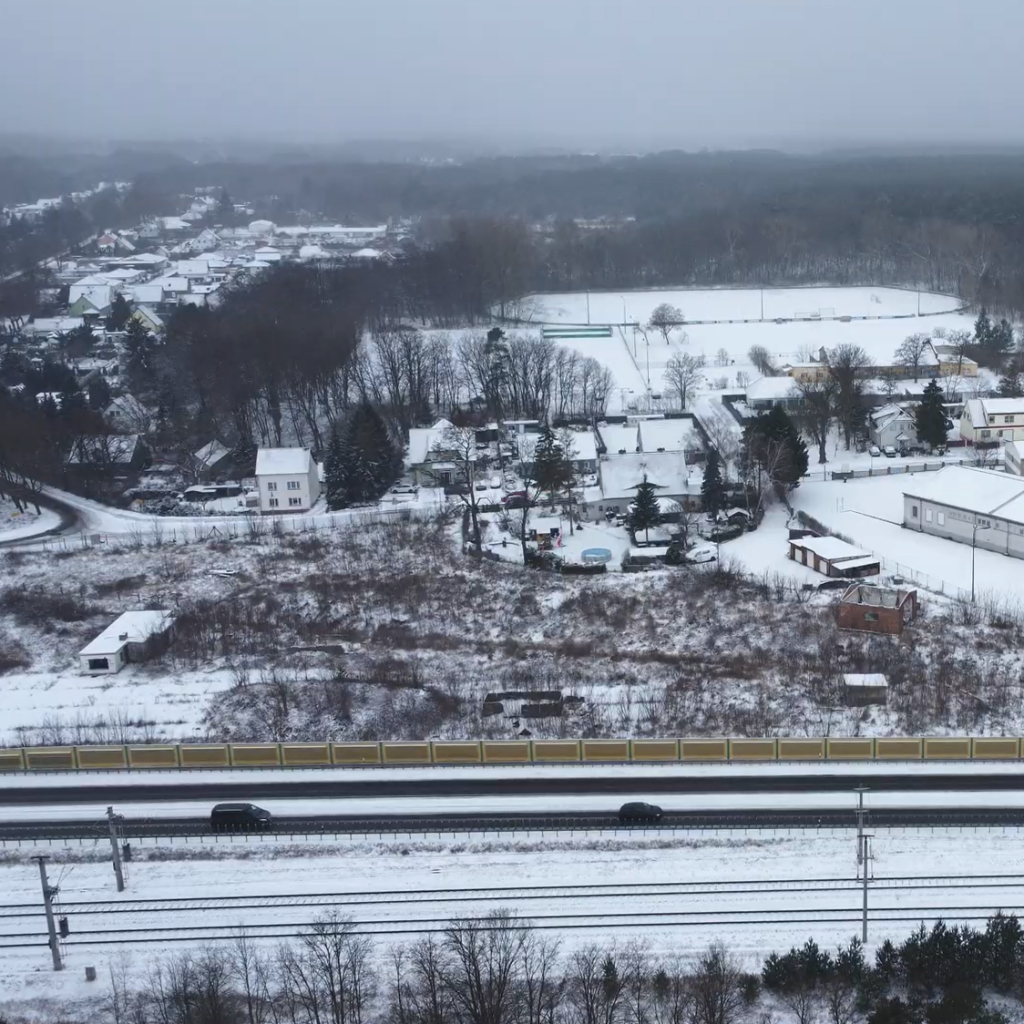
I wrote “Pissing with the Flashlight On” on the night of November 25th and the morning of November 26th, 2025, in a hotel and bomb shelter in Kharkiv. Several dozen Shahed drones hit the city, Ukraine’s second largest, in a ten-minute series of percussive impacts. Air defense knocked down several, but a few drones snuck through. One of them hit a nearby power station. Another hit a residential building about twenty blocks northeast. There were yellow flashes in the sky, and two deafening booms that I will never forget. Four people were killed.
I was in town to record the new Emperor X record /Unified Field/ with some friends. During the war, I do my best to stay in touch with friends in Ukrainian punk scenes. Because of increased danger at home and immigration/emigration restrictions abroad since the beginning of Russia’s full-scale invasion in 2022, Ukrainian creative communities have been partly cut off from the rest of Europe. I and a handful of other North American and European artists I know do our best to bridge this gap, touring Ukraine regularly to perform benefit concerts that raise money for units of the Armed Forces of Ukraine (AFU) and associated medical charities.
Like the rest of the country, punk scenes in Ukraine have been devastated by the war. It is not unusual for DJs, visual artists, poets, musicians, and entire bands to serve in units on the front. Many die. Many more return with wounds, physical and psychological, from which they will never fully recover. Even civilians far from the front are in danger from constant attacks like the one I experienced. Scene kids bear it with the dignity and fury that their countrymen are now famous for.
But life continues. They still have shows, they still make records, they still go to work, they still meet at cafes, they still love and have babies and gossip and experience absurd situations to which wry laughter is the only rational response. For example: imagine the power goes out, you’re in a windowless hostel fresh off of a bus, the hotel has no emergency generator, and you need to take a leak. You get your smartphone out, you turn on the flashlight, you aim as best you can, and hope the lights come back on before morning so you can clean up the splatter before the custodian finds it.
That’s the situation I and a half dozen other hostel guests were in that night in Kharkiv. I laughed, went to bed, and got up the next day with the melody and chorus lyrics fully formed in my head. The power was still out, so I walked two blocks to the closest bomb shelter in the main train station to charge my gear on the emergency power and grab some free tea. I plugged in to one of the rows of sockets beneath the benches I shared with stranded commuters, and set to work writing the verses. I memorized it, then started some other recording prep tasks.
A few weeks later in Los Angeles, over less than 120 minutes, I recorded all parts for the song in a small handful of takes with my producer friend Adam Lasus. The results are this recording, and the absolute blast we had tracking it seems in retrospect like a tactical diversion. Arts communities across Western Europe and North America are mounting an inadequate response to the Russo-Ukrainian War. My short song might put a smile on a few weary faces, but more than that I want it to remind us in Berlin and Bristol and Boston that we might be next in line to face the darkness and chaos that our Ukrainian scene siblings have been fighting back for years. These dangers can come both from external militant mafia states like the Russian Federation and from domestic nativist political forces (Reform UK, Germany’s AfD, and the Trumpist wing of the US GOP, etc.) who share with Putin the desire to replace democratic discourse with transactional might-makes-right neo-feudalism. This danger is not on the way; it is here. The main difference between our art scenes and the scenes in Ukraine is that they know they’re at war. We’re still pretending it’s 2006.
Walking to the train station on my way out of Kharkiv, I was singing the song to myself under my breath, assuming no one would hear me. An AFU soldier headed to work heard me as we passed on the sidewalk. He shook his head with a mixture of amusement and contempt, a gaze I will remember every time I sing this song. Whatever he had to do that day, my foreign language song about power outage piss wasn’t going to get it done. I’m glad I gave him something to laugh at, and I wish him victory, wherever he is. But that moment haunts me; singing songs is simply not enough.
Neither is donating, but if you’re anything like me you’re not joining the army tomorrow. The minimally-decent thing people like us can do for people like that soldier is to donate what we can, and not a cent less. Here are some options (ALWAYS VET ANY ORGANIZATION OR INDIVIDUAL YOU DONATE TO!):
I recently posted on social media about my opposition to the unilateral US invasion of Venezuela. I do not object to the invasion on the grounds that Maduro deserves to be in power. I object because it is a kleptocratic chess move orchestrated by greedy people who are no more deserving of civic trust than the leader they kidnapped. Some conflicts have no good guys.
This irritated a handful of my leftist colleagues, who insist either that Maduro is defensible or that intervention itself can never be moral. I condensed my replies and present them below. They are addressed to people who share my left-adjacent commitments. If you are a nationalist conservative, a strict pacifist, or center your geopolitical analyses entirely around a decolonialist framework, I doubt you’ll find much to like below. But I encourage you to read it anyway if you’re interested, because if you oppose the invasion, we remain functional allies on this topic. I think it’s important for functional allies to understand one another, especially in our overly-fractious times.
I take the view that military force can, for humanitarian reasons, be justified. It is rare, but it happens. I’m thinking of the international bombing campaign against the Serbian government to prevent a genocide of Bosnian Muslims in the ’90s. I’m thinking of the US operation to prevent an ISIS pogrom against Yazidis on Mt. Sinjar and American material support of the SDF in Rojava during some of the Syrian Civil War. In those cases, choosing to isolate rather than intervene would have made for a more cruel, less humanitarian world. Though not by any stretch an IR scholar, I gravitate to thinkers like Michael Walzer (2002) on this topic and recommend the paper referenced below as a starting point if you are interested in his ideas too.
There are two practical problems with the idea of military force for humanitarian reasons. The first is simple hubris: sometimes states over-estimate their ability to help, and military intervention makes whatever problem they hope to solve even worse. The US invasion of Afghanistan is an example. The second is that hegemons can hide partly- or entirely-kleptocratic intent behind fake humanitarian language. The US invasion of Iraq and the Russian invasion of Ukraine are two examples.
I like imagining a currently-implausible but maybe-eventually-possible fix that I call UN With Teeth: a nuclear-armed, conventionally-assertive UN-like supranational force to enforce the decisions of a reformed UN Security Council-like body with true global representation and no advantage for hegemonic powers (e.g. no permanent membership and veto for US/China/Russia/France/GB), grounded by something like the current Article 2 of the UN Charter. Imagine a coordinated assault by an international force — Finns, Ghanans, Mongolians, whoever had the capacity at the time — with a goal of occupying Jerusalem, deposting Netanyahu, and installing an internationally-governed protectorate to defend the rights of all Palestinians and Israelis until the people on the territory agreed to build a state or states, together or apart, capable of upholding universal human rights for all involved. If you share my left-adjacent commitments it’s likely you align with me in seeing that scenario as a good one, if far-fetched in 2026.
In the imaginary world where a UN With Teeth existed, I suspect it would have deposed Maduro and the PSUV in 2019 or at latest 2024, and the Venezuelan people would have applauded. It is this passing resemblance, and only this passing resemblance, that I see as a positive aspect of an otherwise immoral and potentially catastrophic US foreign policy decision.
In the real world we live in, there is no UN With Teeth, and the US uses humanitarian language as a smokescreen for kleptocratic intent. The complexity of this situation arises only because the guy the US removed was an illiberal authoritarian crime boss with BUKs and SAMs and secret police. But now, tragically, even the accidentally-good side benefit of an otherwise-kleptocratic invasion is now unlikely because the Trump administration seems happy to collaborate with Maduro’s colleagues, all illiberal authoritarian PSUV Chavists like Rodriguez. As long as the US gets its oil, there will be no change in regime and no liberation for Venezuela’s people. This is no surprise; the US collaborated with Pinochet in Chile and Videla in Argentina and many others in during Plan Condor in the 1970s. But the problem here is that too few of my colleagues on the left acknowledge the danger of entrenched illiberal regimes like the PSUV using anti-American language as a smokescreen for kleptocracy, just like the US uses humanitarian language. They may be enemies of the US, but they are also kleptocrats, and they even use the same deceptive rhetorical structure. They commit similar crimes, merely shouting “IMPERIALIST!” to hide them instead of “DICTATOR!” They’re not our friends either.
Not everyone is going to share my supranational humanist interventionist fantasy for the future, and that’s fine. But then I’d ask them this, assuming they share basic civic commitments like a belief in human rights with me: In our world of nation-states, how do you imagine we humanitarians successfully defend ourselves and our fellow humans from illiberal authoritarian wannabe hegemons?
At the rate the world changes now, who knows if anything above will make sense in six hours, let alone next week. But I’m leaving it here because I want to help coax fellow leftists away from our tendency to give the enemies of the US an arbitrary ethical blank check. Brazil’s Lula, Colombia’s Petro, and Mexico’s Sheinbaum are worlds away from Maduro, Putin, and Xi, even though they all share anti-American rhetoric. Let’s celebrate that instead of letting an anti-American paint job trick us into clapping like seals for indefensible authoritarians.
(I am distracted by feelings of action paralysis at the start of this new year, and I imagine a few people who keep track of my work might be as well. This is the kind of thought I would usually keep to myself, but hiding it feels wrong right now.)
Recent accelerating changes in domestic and global order are reaching a boiling point: LLMs in the creative industry, rising deaths of despair, phone and drug addiction, economic hardship, enshittification, Ukraine, Venezuela, Gaza…all at once. But instead of inspiring me to action, the boiling point is counterintuitively freezing me in my tracks. The sense of paralysis is overwhelming.
That’s dumb, because I am blessed with a huge menu of options. I can engage in persuasion conversations with people in person and online, trying to convince them that my preferred solution (doubling down on social democracy at home and empowering human rights NGOs with consequential powers abroad) is the right one, but I’m unlikely to succeed in anything but making my opponents and I angry with one another. I can go down the academic rabbit hole that’s available to me in philosophy and music theory, but that’s a retreat into a silo that will have little immediate impact — like worrying about a malfunctioning air conditioner on a crashing Airbus. I can put all of my focus into business activity, making my bar and record label as prosperous as possible, but financial success on its own is empty, a value-neutral trap that distracts from progress towards a better world at the civilizational scale. I can retreat into creative activity and record songs to console and inspire us through the mini-apocalypses to come, but on its own this risks being mere therapy, not world-building. I can raise funds for military aid to Ukraine and humanitarian aid to Gaza and mutual aid in disaster zone the world over, but, but, but, but, but.
But! Sometimes, I do manage to act. I’m not entirely sure how or why. But here’s how I think about it, at least. There are no answers below, but maybe it will make some of you who may be suffering from a similar feeling of paralysis feel less alone and help us all believe that there are reasons to move forward with hope, both in our personal lives and our civilization.
* * *
I suspect I am paralyzed because there are competing modes of operation in my mind, each competing for control and canceling one another out. Riffing off of Weber’s (1946) notion of “value spheres” and Habermas’s (1979) notion of co-existing “validity claims” such as truth vs. rightness vs. sincerity, I call my three mental orientations the analytic mode, the normative mode, and the poetic mode.
Living and working in the analytic mode requires a vigilant devotion to reason. Action must be an output following diligent and dispassionate rational processing of indisputable data. The analytic mode says, pitilessly: “Es ist einfach so.” (“This is just the way things are.”)
Living and working in the normative mode requires a vigilant devotion to justice. Action must be justified by a chain of moral reasoning and takes place no sooner or later than when the thinker is confident in their judgment. The normative mode says, with conviction: “Es sollte so sein.” (“This is what should be.”)
Living and working in the poetic mode requires faith in pre- and post-rational instinct. Inspiration must be followed by a concomitant action which flows, or at least seems to flow, from an unseen but deeply-felt integrated will. The poetic mode says, in sublime mania: “Es muss sein!” (“It must be!”)
The modes sometimes resemble each other structurally, but they should be discussed separately due to subtle aspects of their simultaneous operation within a single psyche. All individuals exhibit their own unique, person-defining mixes of analytic, normative, and poetic tendencies. These tendencies moderate both how an individual behaves within a given civilization and how a civilization developmes over time as the individuals within it respond to ever-changing, time-bounded menus of possible actions.
I wrote this because I woke up on the wrong side of the bed on the first work day of 2026, feeling an urgent desire to deliberately guide how I navigate an increasingly-chaotic world. Which mode do I have a tendency towards today? This week? Overall? Which mode would serve me best in what increasingly seems likely to be an absolute roller coaster of a decade? Which modes should I encourage in my colleagues and in the organizations I influence? Thinking as an artist, what kind of thoughts and actions do I want to encourage in the people who look to my work for solace and inspiration? These questions would be easier to answer if the modes did not so roundly contradict one another. They are three self-valid frameworks for navigating the world, but like the Hubble tension they provide very different answers. How am I to decide which path to take when they diverge?
I’m not going to come up with the answers this morning on this blog post, and neither are you in any comment responses. We have work to do! (And that’s the poetic mode talking.) For the moment we have to simply commit to answering these questions as best we can each day, live as joyfully as we can in a wobbly world, and operate with a hope that unresolved tension between analytic, normative, and poetic modes of life can be a powerful engine of creative kindness if harnessed correctly.
I just found them yesterday, so I’m no expert. But as far as I can tell Psh-Psh were a portal into 1980s Caracas for the international new wave punk movement. Their song “Hombres” is a slayer on a meridian between Bronx legends ESG and gifted French agit-pop star Lizzy Mercier Descloux (who the Psh-Psh guitarist quotes in one of the lead lines of “Hombre”). Translating loosely from their Bandcamp page (GTranslate would probably do it more reliably, but I think the human touch is good to have for things like this):
Psh-Psh was an all-female band formed in Venezuela at the end of 1980 and ended their activity in 1988. The band consisted of Paz Alejandra Hidalgo on guitar and backup vocals, Esther Cohen on drums and backup vocals, and Ofelia Brito on bass and lead vocals…They did not see themselves as punks and in fact were uncomfortable with this description, but they certainly had many of the chronological and conceptual characteristics to be considered part of the first generation of the genre in our country. They were irreverent: their name mimicks the vocal gesture men use to get the attention of a woman. Their lyrics were irreverent and contained social themes (war, religion, the alienation of modern life)…About these songs, Ofelia says: ‘Some were recorded at rehearsal (those with the poor sound) and others were demos for Sonografica with the goal of recording an album, but it was never recorded after we refused the metamorphosis the record label proposed for us.'”
It’s a great time to support Venezuelan art projects. Buy Psh-Psh’s 1983 compilation album here: