
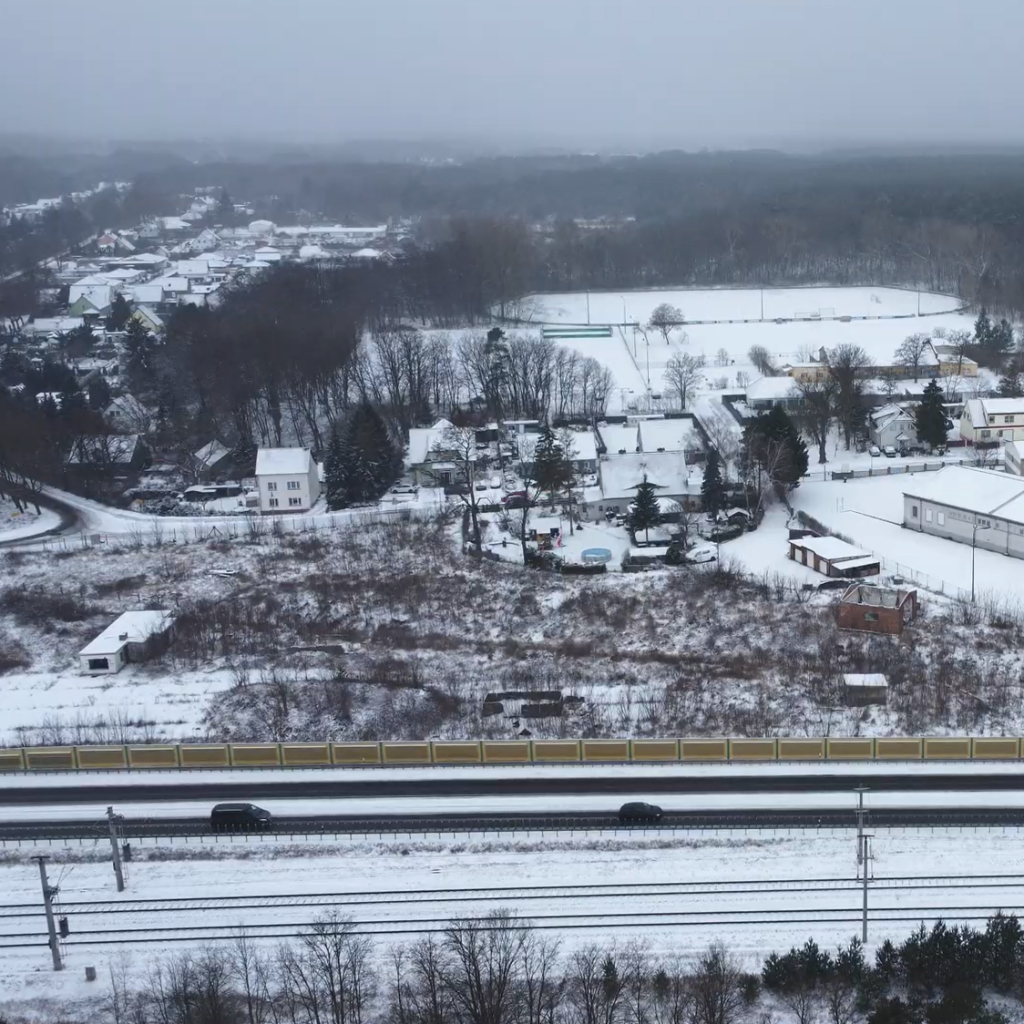
(I am distracted by feelings of action paralysis at the start of this new year, and I imagine a few people who keep track of my work might be as well. This is the kind of thought I would usually keep to myself, but hiding it feels wrong right now.)
Recent accelerating changes in domestic and global order are reaching a boiling point: LLMs in the creative industry, rising deaths of despair, phone and drug addiction, economic hardship, enshittification, Ukraine, Venezuela, Gaza…all at once. But instead of inspiring me to action, the boiling point is counterintuitively freezing me in my tracks. The sense of paralysis is overwhelming.
That’s dumb, because I am blessed with a huge menu of options. I can engage in persuasion conversations with people in person and online, trying to convince them that my preferred solution (doubling down on social democracy at home and empowering human rights NGOs with consequential powers abroad) is the right one, but I’m unlikely to succeed in anything but making my opponents and I angry with one another. I can go down the academic rabbit hole that’s available to me in philosophy and music theory, but that’s a retreat into a silo that will have little immediate impact — like worrying about a malfunctioning air conditioner on a crashing Airbus. I can put all of my focus into business activity, making my bar and record label as prosperous as possible, but financial success on its own is empty, a value-neutral trap that distracts from progress towards a better world at the civilizational scale. I can retreat into creative activity and record songs to console and inspire us through the mini-apocalypses to come, but on its own this risks being mere therapy, not world-building. I can raise funds for military aid to Ukraine and humanitarian aid to Gaza and mutual aid in disaster zone the world over, but, but, but, but, but.
But! Sometimes, I do manage to act. I’m not entirely sure how or why. But here’s how I think about it, at least. There are no answers below, but maybe it will make some of you who may be suffering from a similar feeling of paralysis feel less alone and help us all believe that there are reasons to move forward with hope, both in our personal lives and our civilization.
* * *
I suspect I am paralyzed because there are competing modes of operation in my mind, each competing for control and canceling one another out. Riffing off of Weber’s (1946) notion of “value spheres” and Habermas’s (1979) notion of co-existing “validity claims” such as truth vs. rightness vs. sincerity, I call my three mental orientations the analytic mode, the normative mode, and the poetic mode.
Living and working in the analytic mode requires a vigilant devotion to reason. Action must be an output following diligent and dispassionate rational processing of indisputable data. The analytic mode says, pitilessly: “Es ist einfach so.” (“This is just the way things are.”)
Living and working in the normative mode requires a vigilant devotion to justice. Action must be justified by a chain of moral reasoning and takes place no sooner or later than when the thinker is confident in their judgment. The normative mode says, with conviction: “Es sollte so sein.” (“This is what should be.”)
Living and working in the poetic mode requires faith in pre- and post-rational instinct. Inspiration must be followed by a concomitant action which flows, or at least seems to flow, from an unseen but deeply-felt integrated will. The poetic mode says, in sublime mania: “Es muss sein!” (“It must be!”)
The modes sometimes resemble each other structurally, but they should be discussed separately due to subtle aspects of their simultaneous operation within a single psyche. All individuals exhibit their own unique, person-defining mixes of analytic, normative, and poetic tendencies. These tendencies moderate both how an individual behaves within a given civilization and how a civilization developmes over time as the individuals within it respond to ever-changing, time-bounded menus of possible actions.
I wrote this because I woke up on the wrong side of the bed on the first work day of 2026, feeling an urgent desire to deliberately guide how I navigate an increasingly-chaotic world. Which mode do I have a tendency towards today? This week? Overall? Which mode would serve me best in what increasingly seems likely to be an absolute roller coaster of a decade? Which modes should I encourage in my colleagues and in the organizations I influence? Thinking as an artist, what kind of thoughts and actions do I want to encourage in the people who look to my work for solace and inspiration? These questions would be easier to answer if the modes did not so roundly contradict one another. They are three self-valid frameworks for navigating the world, but like the Hubble tension they provide very different answers. How am I to decide which path to take when they diverge?
I’m not going to come up with the answers this morning on this blog post, and neither are you in any comment responses. We have work to do! (And that’s the poetic mode talking.) For the moment we have to simply commit to answering these questions as best we can each day, live as joyfully as we can in a wobbly world, and operate with a hope that unresolved tension between analytic, normative, and poetic modes of life can be a powerful engine of creative kindness if harnessed correctly.
References
Habermas, J. (1979). What is universal pragmatics? In Communication and the evolution of society (T. McCarthy, Trans., pp. 1-68). Beacon Press. (Original work published 1976)
http://mitp-content-server.mit.edu:18180/books/content/sectbyfn?collid=books_pres_0&fn=9780262581875_sch_0001.pdf&id=5130
Weber, M. (1946). Science as a vocation. In H. H. Gerth & C. W. Mills (Trans. & Eds.), From Max Weber: Essays in sociology (pp. 129-156). Oxford University Press. (Original work published 1919)
https://sociology.sas.upenn.edu/sites/default/files/Weber-Science-as-a-Vocation.pdf